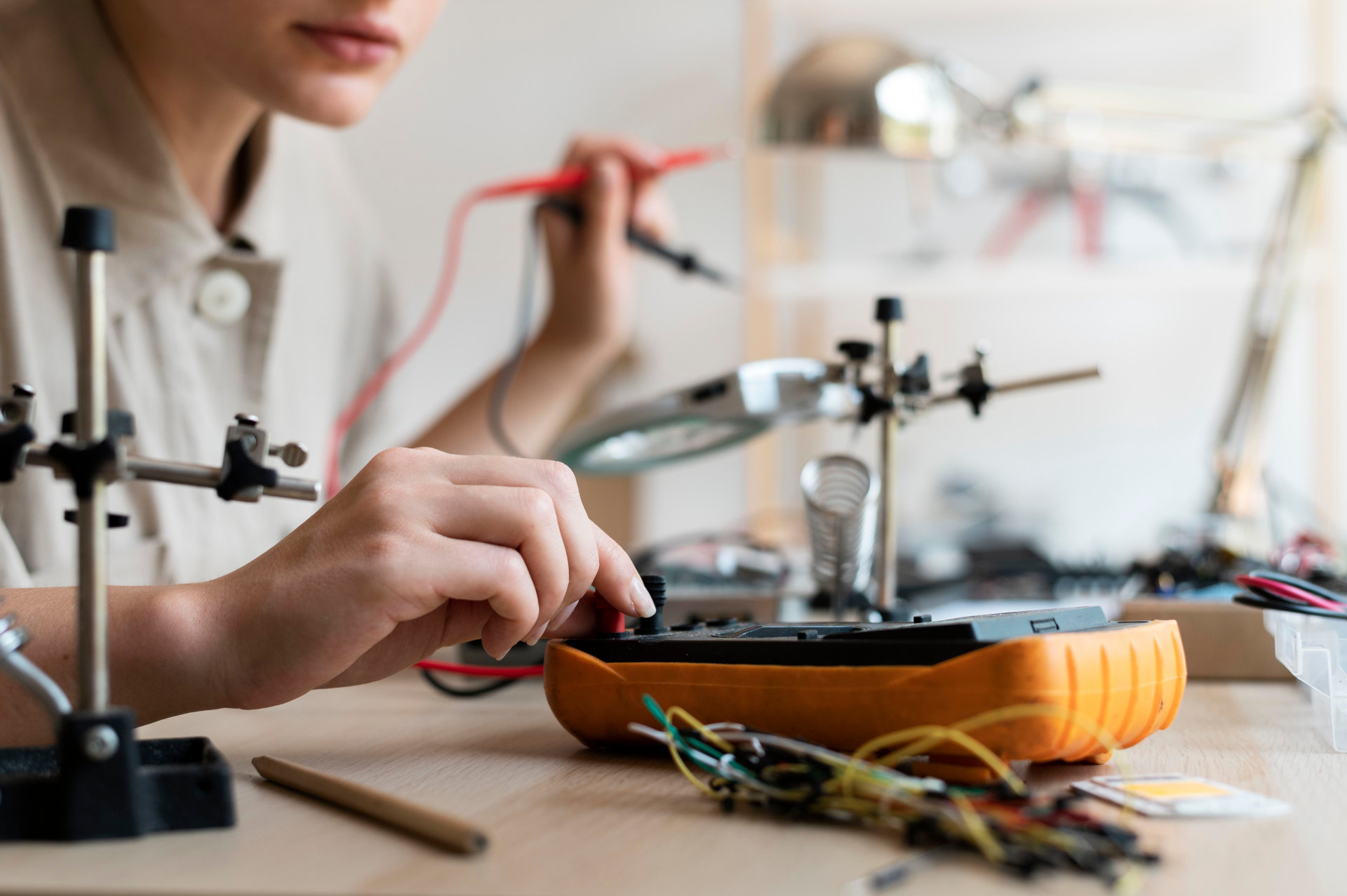
Series vs Parallel Circuits: What Is the Difference?
Learn the key differences between series and parallel circuits. Including current, voltage, resistance rules, brightness effects, and real-world examples.



Helping your child revise for PSLE is less about how many hours they study and more about how they study. The most effective PSLE revision approach combines structured topic coverage, active recall techniques, regular timed practice, and consistent emotional support through the pressures of P6.
For Science especially, how your child approaches each paper component matters as much as the volume of work they put in.
At The Science Academy, our PSLE Science tutors have guided hundreds of P6 students through their exam preparation. The strategies here are drawn from what we observe working in the lead-up to exam season, including the patterns that most often hold students back.
Re-reading notes, highlighting key sentences, and copying out definitions all feel productive. However, the problem is that they produce weak long-term retention. In turn, your child may recognise the information when they see it, but struggle to retrieve it independently under exam conditions.
Active revision works differently. It forces the brain to retrieve information without a prompt, and that retrieval effort is what builds lasting retention. For PSLE Science, active revision looks like:
Practice papers are most useful when treated as diagnostic tools rather than score-chasing exercises. A full paper done under timed conditions simulates the actual exam environment and helps your child manage time allocation under pressure. The real value, however, comes from what happens after the paper is marked.
For each practice attempt, use the results to:
PSLE Science has a significant factual load, covering life cycles, food chains, properties of materials, and organ systems, among other topics.
Simple mnemonics can help retain the sequence or components of these. A short phrase or acronym built around content your child already understands tends to stick better than repetitive copying.
Meanwhile, concept maps are useful in helping students see how topics connect across the syllabus. This is particularly useful for the Systems and Interactions themes, where understanding relationships between components matters more than memorising individual definitions.
Ask your child to draw a concept map from memory, then compare it against their notes. The gaps between what they drew and what they missed reveal the areas worth targeting.
Not all mistakes carry the same weight, and treating them identically wastes revision time. For each wrong answer in a practice paper, ask:
The answers determine what kind of follow-up revision is needed. Get your child to build a mistake log to record recurring error types after each practice session, so that they can revisit it in the days before PSLE.

Every child studies for PSLE differently, and a revision plan that works well for one student may not suit another. The framework below is a flexible guide rather than a fixed schedule. Adjust the pacing to suit your child’s starting point, subject strengths, and stress tolerance.
The priority at this stage is coverage. Before your child can practise effectively, they need a working understanding of all the topics that may appear in the exam.
Once the major topics are covered, shift the focus from reading and reviewing to doing. Exposure to exam conditions at this stage builds both confidence and time management.
This final stretch of PSLE revision is about consolidation and improvement, as introducing unfamiliar material or attempting new papers at this stage can increase anxiety without improving performance.
Beyond the broader phases, how each study day is structured makes a real difference. Rather than leaving revision time open-ended, organise after-school hours into clear blocks, such as:
| Block | Activity | Duration |
| Study block 1 | Focused revision or practice | 45 minutes |
| Break | Rest, snack, light movement | 15 minutes |
| Study block 2 | Focused revision or practice | 45 minutes |
| Free time | Play, family time, hobbies | Remainder of evening |
When your child sits down to study, they should know exactly which topic they are covering and what they are trying to achieve in that session.
Additionally, adequate sleep is essential at every phase. Fatigue significantly reduces retention and the ability to think clearly under exam pressure, so encourage your child to maintain a consistent bedtime routine, especially in the final weeks before PSLE.
Academic preparation matters, but so does the environment your child is revising in. P6 is a pressured year, and many parents feel that pressure too. However, the goal during this period is not to eliminate stress entirely but to keep it at a level that motivates rather than overwhelms.
Prelim results often land harder than expected, and how you respond in that moment shapes how your child approaches the final stretch of PSLE revision.
The most useful shift is moving the conversation away from outcomes and towards process. Research in educational psychology suggests that children who attribute their performance to controllable factors, such as effort, study strategies, and time management, are more motivated to improve than those who attribute it to uncontrollable ones.
When a child concludes “I’m just not good at Science” or “I was unlucky,” there is nothing actionable to work with. In contrast, when they recognise that their revision approach left gaps, there is something concrete to address.
In practice, this means reframing how you ask questions after a disappointing result. For example, “How did you revise for this topic?” opens a productive conversation, rather than “Why did you get this wrong?”. The goal is to help your child see the result as feedback rather than a verdict.
These strategies to cope with exam stress work best when practised regularly in the weeks before PSLE season, rather than used for the first time in a moment of panic.
5-Senses Grounding
When your child feels overwhelmed or anxious, guide them through the following:
Working through the senses in sequence brings attention back to the present moment and interrupts the cycle of anxious thinking.
4-7-8 Breathing
This is a simple breathing technique your child can use before an exam, during a revision break, or at bedtime:
The extended exhale activates the body’s natural calming response. Like any technique, it becomes more effective with regular practice.
Beyond revision schedules and practice papers, research suggests that children perform better when they feel that parental love and pride are not tied to their results. Therefore, make it a point to tell your child explicitly that your relationship with them does not change regardless of how the PSLE goes.
Additionally, specific praise on effort and process tends to be more motivating than praise on outcomes. For instance, saying “I noticed you went back and re-did the questions you got wrong” acknowledges something your child chose to do, which reinforces the behaviour.
Finally, during the PSLE period, try to maintain at least one regular enjoyable activity together as a family, whether that is a walk, a meal out, or something simple at home. Keeping connection present during a stressful season makes a measurable difference in how your child carries the pressure of the exam.
In the final two to three weeks, the priority shifts from coverage to consolidation. Doing more papers at this stage adds limited value if the underlying weak areas have not been addressed.
Instead, a more effective approach is to set the practice papers aside and work directly from quick revision notes, mind maps, and the mistake log your child has built up over the preceding weeks.
New material in the final days is more likely to introduce anxiety than improve performance. Instead, revisit questions where mistakes were previously made and confirm that the correct concepts are now understood.
Additionally, maintain a consistent sleep schedule and refrain from extending study hours at the expense of rest.
Keep the day before light and familiar with a brief review of topic summaries and the mistake log.
A few practical steps worth doing the evening before:
Booklet A contains 30 multiple-choice questions, each carrying 2 marks, for a total of 60 marks.
Four options are provided for each question. Both Life Science and Physical Science topics are tested across the booklet.
One feature of PSLE Science MCQs worth preparing for is the use of distractors. These are answer options that look plausible at first glance but contain a subtle error in reasoning or scientific terminology. To approach them:
Booklet B contains 10 to 11 structured questions, each carrying between 2 and 5 marks, for a total of 40 marks.
As with Booklet A, questions draw from both Life Science and Physical Science themes.
Structured answers must use precise scientific keywords and concepts to score full marks. As such, encourage your child to practise a clear answering structure:
The full paper runs for 1 hour and 45 minutes. Here’s a suggested allocation to work with:
| Component | Questions | Suggested Time | Approximate Time Per Question |
| Booklet A (MCQ) | 30 questions | 45 minutes | 1.5 minutes |
| Booklet B (Structured) | 10 to 11 questions | 40 minutes | 3.5 to 4 minutes |
| Checking | – | 15 to 20 minutes | – |
If your child gets stuck on an MCQ, the most effective response is to move on and return to it later. Spending too long on a single 2-mark question risks running short of time for the structured questions in Booklet B, where individual questions carry more marks.
The PSLE Science syllabus is organised around five themes, spanning Life Science and Physical Science:
Over-focusing on familiar topics often leaves gaps in less-practised areas, and those gaps tend to show up in the structured questions in Booklet B. As such, revision should cover all five systematically.
A few topic areas consistently produce mark losses for P6 students:
Practice paper review becomes significantly more useful when mistakes are categorised rather than simply corrected. After each paper, go through the errors and sort them into three types.
| Type of Mistake | Fix |
| Conceptual gap: Questions your child got wrong because they did not fully understand the underlying science. | Targeted re-teaching of the concept. |
| Keyword and phrasing errors: Questions where your child understood the idea but lost marks because the answer was incomplete or imprecise. | Practising written answers. |
| Careless mistakes: Errors that your child can identify and correct themselves when they look back at the question. | Slowing down during the paper and checking answers before the paper ends. |
The most effective approach combines structured topic coverage, active revision techniques (such as self-testing and timed practice), regular mistake review, and consistent emotional support throughout P6.
For PSLE Science specifically, understanding the exam format and revising systematically by theme makes a meaningful difference. A practical starting point is a three-phase plan:
Most students benefit from beginning structured revision 10 to 12 weeks before the PSLE written papers, which typically fall in October.
A phased approach works well. Use Term 3 for consolidation across all topics, September for timed practice papers and mistake review, and the final two to three weeks for targeted revision of weak areas.
Starting earlier reduces the pressure of cramming and gives conceptual gaps enough time to be properly addressed.
Quality matters more than total hours. Two focused hours of active PSLE revision with clearly defined goals will generally produce better results than four hours of passive re-reading.
As a general guide, try organising study time into 45-minute blocks with a specific topic and goal for each session, followed by a short break.
Prelim papers are often set harder than the actual PSLE, so a disappointing result is not a reliable predictor of the final outcome.
The most productive response is to use the prelim results as a diagnostic tool. Review the paper carefully to identify which topics and question types generated the most errors, then focus the remaining revision time on those gaps. Help your child see the result as useful feedback rather than a reflection of their ability.
The PSLE Science syllabus covers five themes: Diversity, Cycles, Systems, Energy, and Interactions. Revision should cover all five, as questions are drawn from Life Science and Physical Science across the paper.
Do also focus on areas where students often lose marks, including experimental questions (identifying variables and fair test conditions), structured answers with missing scientific keywords, and topics in electricity and circuits.
No. Practice papers are most useful in the middle phase of revision, roughly four to eight weeks before PSLE, when they can be used to simulate exam conditions and identify specific gaps.
In the earlier consolidation phase, conceptual understanding should come first. Meanwhile, in the final three days before the exam, stop attempting new papers entirely and focus on reviewing mistakes instead.

If your child needs more targeted support in specific Science themes or exam technique, The Science Academy’s PSLE Science tuition programme is built around these gaps.
With small class sizes and targeted coaching on both content and exam technique, TSA’s programme is designed to give your child the best possible chance of achieving their target grade in PSLE Science.
Contact our Science tuition centre to find out how we can support your child’s PSLE preparation today!
Learn the key differences between series and parallel circuits. Including current, voltage, resistance rules, brightness effects, and real-world examples.

Not sure which to take for A-Levels? Compare the syllabus, exam format, practical assessment, and university requirements to decide.

Not sure which to take for A-Levels? Compare the syllabus, exam format, and university requirements to make the right choice.

Struggling with exam stress? Learn effective strategies for managing exam stress and anxiety, reducing brain fog & boosting your success for exam season!

Looking for science experiments for your kids to do at home? These 5 fun, beginner-friendly activities use everyday items and take under 10 minutes.

Understand key changes to Singapore’s Gifted Education Programme in 2024 and help your child succeed in the new GEP curriculum for primary schools today!
